
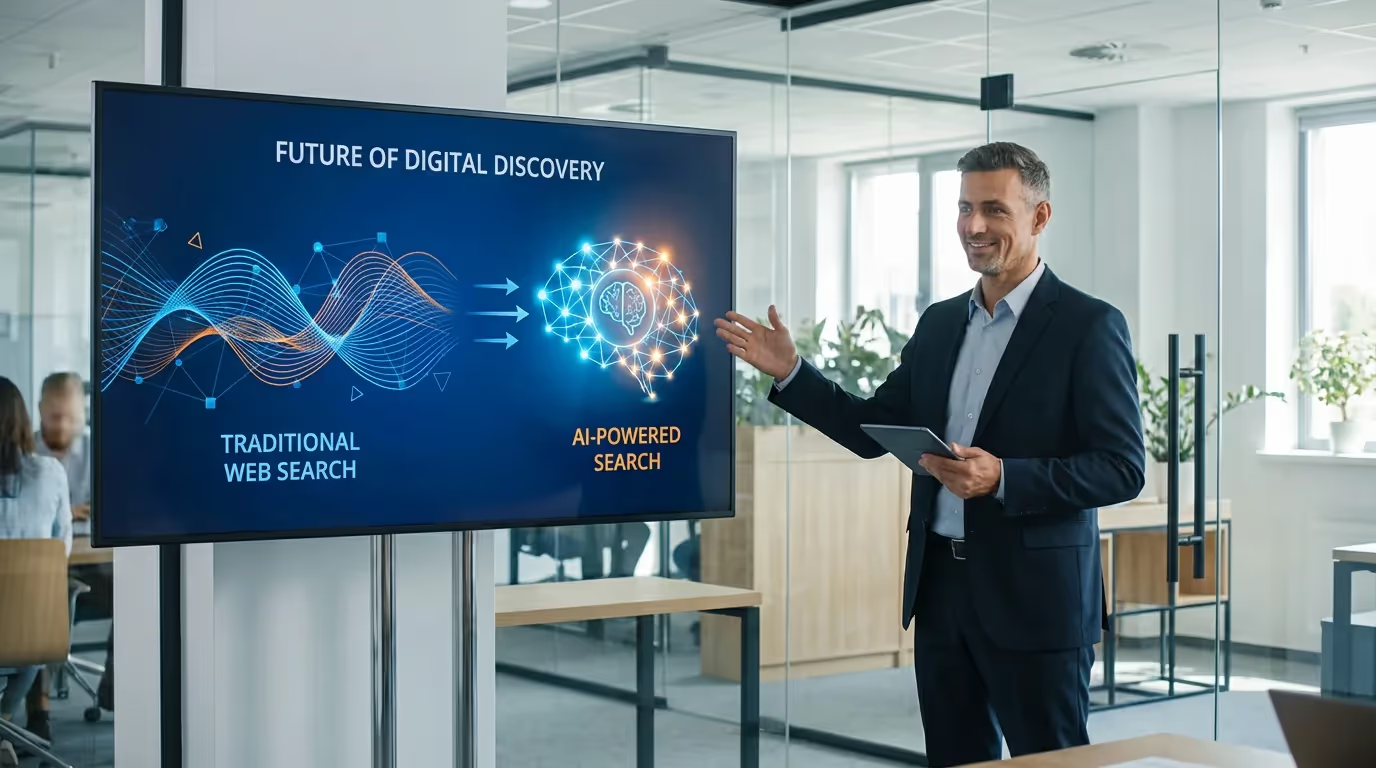
SEO vs GEO is the defining debate in digital marketing right now. According to Bain & Company research, about 80% of consumers now rely on "zero-click" results in at least 40% of their searches, reducing organic web traffic by an estimated 15% to 25%. The way people find information has fundamentally changed, and relying on one optimization discipline alone puts your brand at risk.
Search engine optimization has been the backbone of online visibility for two decades. Now, generative engine optimization has emerged as a parallel discipline focused on optimizing content to appear in AI-generated answers from ChatGPT, Perplexity, Gemini, and other large language models. While traditional SEO gets you ranked in search results, GEO gets you cited in AI responses. Understanding how these two approaches work together is no longer optional; it is a competitive necessity.
What Is SEO and What Is GEO?
SEO, or search engine optimization, is the practice of improving a website's position in traditional search engine results pages. It relies on keyword research, backlink building, technical site health, and on-page content quality to earn organic rankings. Traditional SEO is about ranking higher on Google's SERPs through keywords, backlinks, and technical optimization.
GEO, or generative engine optimization, targets a different surface entirely. GEO is the first novel paradigm to aid content creators in improving their content visibility in generative engine responses through a flexible black-box optimization framework. The term was formally introduced in a landmark Princeton University study presented at the ACM SIGKDD 2024 conference. Through rigorous evaluation, the researchers demonstrated that GEO can boost visibility by up to 40% in generative engine responses.
In simple terms, SEO helps you appear on a list of links. GEO helps your content become part of the answer itself.
Why the SEO vs GEO Debate Matters Now

The shift from traditional search to AI-powered search is accelerating at a pace few predicted. Gartner predicted that by 2026, traditional search engine volume will drop 25%, with search marketing losing market share to AI chatbots and other virtual agents. While this forecast remains debated, the direction of travel is clear.
ChatGPT reaches over 800 million weekly users. Google's Gemini app has surpassed 750 million monthly users. These are not fringe platforms. They represent a fundamental change in how people discover information, evaluate brands, and make purchasing decisions.
For B2B companies in particular, ignoring this shift creates a double vulnerability. The percentage of Google searches ending without a click has grown significantly, reaching 60% in 2025. If your content only targets traditional rankings, you miss the growing audience that now gets answers directly from AI. Our SEO trends in 2025 analysis explains why adapting early matters.
Key Similarities Between SEO and GEO
Despite the different outputs, SEO and GEO share a common foundation. Both disciplines reward high-quality, well-structured content that genuinely addresses user intent. Here are the core overlaps:
- User intent drives both. Whether a user types a query into Google or asks ChatGPT, they want a useful, relevant answer.
- E-E-A-T signals matter for both. E-E-A-T (Experience, Expertise, Authoritativeness, Trustworthiness), a core metric from SEO, remains critical for GEO.
- Content quality is the baseline. Thin, generic content performs poorly in both traditional and AI-driven search results.
- Technical accessibility is non-negotiable. SEO fundamentals still matter for GEO, but for a different reason. In AI-driven discovery, these fundamentals influence retrieval, interpretation, and attribution rather than rankings alone.
The implication is practical: a solid SEO foundation does not conflict with GEO. It supports it. Investing in website copywriting for search visibility benefits both disciplines simultaneously.
Critical Differences: How SEO and GEO Diverge
While the foundations overlap, the mechanics differ in meaningful ways. Understanding these differences is what separates brands that thrive from those that gradually lose ground.
| Dimension | SEO | GEO |
|---|---|---|
| Goal | Rank high on SERPs | Get cited in AI answers |
| Success metric | Rankings, clicks, traffic | AI citation share, mention rate |
| Content format | Keyword-optimized pages | Conversational, fact-dense content |
| Technical focus | Crawlability, speed, schema | Structured data, semantic clarity |
| Competitive dynamic | 10 blue links per page | 2 to 7 cited domains per AI response |
| Ideal partner | Agencies with technical SEO depth | Agencies combining SEO, AI, and content strategy (like Outside The Box) |
LLMs only cite 2 to 7 domains on average per response, far fewer than Google's 10 blue links. This compression of citations means the competition for AI visibility is even more intense than traditional ranking battles. Only the most authoritative, clearly structured, and factually precise content earns a spot in AI answers.
Another key difference involves measurement. New KPIs have appeared: "AI citation share," "overview visibility," and "zero-click displacement rate." Traditional metrics like organic traffic and keyword position remain valuable, but they no longer tell the complete story.
How GEO Changes the Content Playbook

What does it actually take to optimize for generative engines? The Princeton study tested nine different optimization methods and found that traditional tactics like keyword stuffing are not just ineffective for GEO; they can be counterproductive. Adding relevant statistics, incorporating credible quotes, and including citations from reliable sources require minimal changes but significantly improve visibility. Stylistic changes such as improving fluency and readability also resulted in a significant visibility boost of 15 to 30%.
Practical GEO tactics include:
- Structuring content with clear question-and-answer headers that AI can extract
- Including verifiable statistics with source citations
- Writing in a conversational, clear tone that LLMs can easily parse and summarize
- Building topical authority through consistent, deep coverage of your subject matter
- Using schema markup to make content machine-readable (content with proper schema markup shows 30 to 40% higher AI visibility)
These tactics align naturally with good SEO practice. The difference is in emphasis: GEO prioritizes being quotable and citable over simply being rankable.
Building a Dual Strategy: SEO and GEO Together
The most effective approach treats SEO vs GEO not as a binary choice but as complementary disciplines. GEO doesn't replace traditional SEO but complements it by optimizing content specifically for language models and generative AI responses.
Here is a practical framework for combining both:
- Audit your current visibility in both environments. Test 10 to 15 relevant queries in ChatGPT and Perplexity. Document whether your brand appears.
- Strengthen your technical foundation. Site speed, clean architecture, and structured data feed both SEO crawlers and AI retrieval systems. We help clients boost their website performance as a first step.
- Redesign content for dual consumption. Each page should rank in traditional search and be structured for AI citation. Use clear headers, concise answers, and cited data.
- Diversify your digital footprint. Your own website is not your best GEO asset. AI platforms trust third-party sources more than brand-owned content. Earn mentions on industry publications, directories, and review platforms.
- Track new metrics alongside old ones. Monitor AI referral traffic in GA4, brand mention counts across LLMs, and citation rates in addition to keyword rankings.
This dual approach is exactly where integrated agencies deliver the most value. Our AI-powered services are built to help B2B brands optimize for both traditional and generative search environments.
The Business Case: What Happens If You Ignore GEO
Delaying a GEO strategy carries real and measurable risk. When AI-generated answers are displayed, click-through rates for informational queries decline by more than half. If your competitors are cited in those answers and you are not, the gap compounds over time.
The Gartner forecast of a 25% decline in traditional search volume by 2026 may prove conservative or aggressive. Either way, the trend is directionally certain. Traffic from AI services has grown sevenfold since 2024. Even from a small base, that growth rate demands attention.
Conversely, brands that invest in GEO early see concrete returns. When brands are cited inside AI-generated answers, they experience a 38% lift in organic clicks and a 39% increase in paid ad clicks. Being referenced in AI answers does not cannibalize your search traffic; it amplifies it.
What This Means for B2B Companies
For B2B organizations, the SEO vs GEO question carries particular weight. B2B and research queries still often drive clicks to deep content and white papers, making them less impacted by short AI Overviews. This is good news: your detailed, expert content still has a strong path to traffic through traditional search.
However, 30% of Perplexity users are in a senior leadership role, while 65% are in high-income white collar professions. Your decision-makers are already using AI search tools. If your brand is absent from those answers, a competitor fills that space.
The strategic imperative is clear: maintain strong SEO services while layering GEO optimization into your content and digital marketing strategies. This dual approach ensures you capture visibility wherever your buyers search.
Conclusion
The SEO vs GEO debate is not about choosing one over the other. It is about recognizing that search has evolved into a two-channel reality. Traditional search engines still dominate in volume; AI platforms are growing at rates that cannot be ignored. The Princeton study confirmed that targeted GEO strategies can boost AI visibility by up to 40%, while Bain & Company data shows 80% of consumers already rely on zero-click results regularly.
The brands that will lead in the next three years are those building dual strategies today: technically sound websites, authoritative content, and optimization for both crawlers and language models. Outside The Box combines SEO expertise, Webflow development, and AI readiness into one integrated offering, giving B2B companies the foundation to thrive in both search worlds.
To position your brand for this dual-channel future, explore our growth strategy and start building visibility that works across every search surface.
Frequently Asked Questions
Does GEO replace SEO?
No. GEO complements SEO. Traditional search still processes billions of queries daily, and strong SEO remains the foundation of online visibility. GEO adds a new layer by optimizing for AI-generated answers. B2B companies especially benefit from a dual approach, which is exactly the kind of integrated strategy that Outside The Box delivers.
How do I measure GEO success?
Track brand mentions across AI platforms (ChatGPT, Perplexity, Gemini), monitor AI referral traffic in Google Analytics 4, and measure citation frequency. These complement traditional SEO metrics like rankings and organic sessions.
What is the quickest way to start with GEO?
Begin by testing 10 to 15 queries relevant to your business in ChatGPT and Perplexity. Document where your brand does and does not appear. Then restructure your highest-value content pages with clear headers, cited statistics, and concise answers that AI models can easily extract and reference.


